Does Cape Cod Use Seed Oils? Ingredients Breakdown
Quick Answer
🛡️ Trying to avoid seed oils? Seed Oil Scout has you covered.
2M+ downloads. 23K+ five-star reviews. Verified restaurant and grocery data so you always know what you're eating.
Download the App →
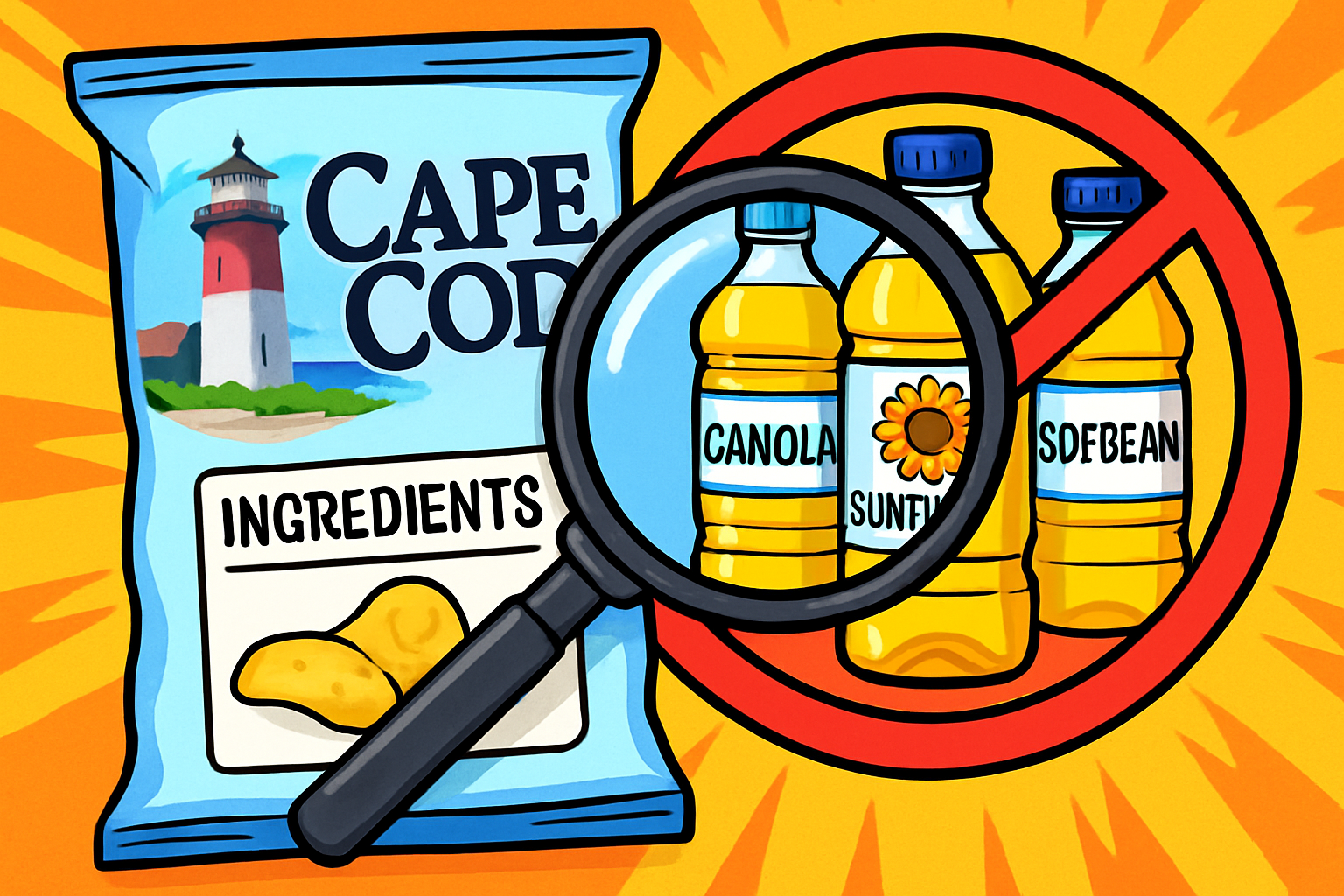
Yes, Cape Cod potato chips use seed oils as their primary cooking fat. The brand uses canola oil and sunflower oil, both high in omega-6 linoleic acid. While Cape Cod markets itself as having "simple ingredients," these industrial seed oils are highly processed and far from the traditional fats our ancestors used for cooking.
If you're trying to avoid seed oils, Cape Cod chips aren't your best option. There are better alternatives cooked in coconut oil, avocado oil, or even beef tallow.
What Oils Does Cape Cod Use?
Cape Cod potato chips are kettle-cooked in the following seed oils:
- **Canola oil** (primary cooking oil)
- **Sunflower oil** (used in some varieties)
Both of these oils are industrially processed seed oils that didn't exist in the human food supply until the 20th century. Canola oil comes from rapeseed plants and requires heavy chemical processing to become edible. Sunflower oil, while sounding natural, is also highly refined and stripped of nutrients during processing.
Cape Cod's ingredient lists are refreshingly short compared to many chip brands, but the cooking oil choice remains problematic from a health perspective. The brand often emphasizes its "simple ingredients" and "kettle-cooked" methods, but the foundation of any chip is the oil it's cooked in.
Full Ingredients Breakdown
A typical Cape Cod Original potato chip contains:
- Potatoes
- Canola oil and/or sunflower oil
- Salt
That's it. Three ingredients sounds great until you realize that one of those ingredients makes up a significant portion of what you're eating. When chips are kettle-cooked, they absorb substantial amounts of the cooking oil, meaning you're consuming concentrated doses of these omega-6 rich fats.
The "and/or" language on Cape Cod labels indicates they switch between canola and sunflower oil based on availability and cost. Both oils present similar health concerns due to their high linoleic acid content.
Some specialty Cape Cod flavors may include additional ingredients like sea salt, vinegar powder, or natural flavors, but the base recipe remains potatoes cooked in seed oils.
Are Cape Cod Chips Healthy?
Cape Cod chips fall into the "better than most, but still not ideal" category. Here's why:
**The Good:**
- No artificial preservatives
- No artificial flavors in most varieties
- Simple ingredient list
- Non-GMO potatoes
- Kettle-cooked process retains some potato nutrients
**The Problematic:**
The seed oils used for cooking create several health concerns. Canola and sunflower oils are both high in omega-6 linoleic acid, which can promote inflammation when consumed in excess. The average American already gets too much omega-6 from processed foods, throwing off the crucial omega-3 to omega-6 balance.
These oils are also prone to oxidation, especially when heated to the high temperatures required for chip making. Oxidized fats can contribute to cellular damage and inflammation in the body.
When you eat a serving of Cape Cod chips, you're getting approximately 8-10 grams of fat, most of which comes from these problematic oils. That's a significant dose of omega-6 fatty acids in one snack.
Why Seed Oils Are Problematic
The seed oils used in Cape Cod chips present several health concerns:
**High Linoleic Acid Content:** Both canola and sunflower oil contain 15-30% linoleic acid, an omega-6 fatty acid. Excessive omega-6 intake can disrupt the body's inflammatory response and compete with beneficial omega-3 fatty acids.
**Industrial Processing:** These oils undergo extensive refining involving hexane extraction, deodorization, and bleaching. This processing creates trans fats and removes any natural antioxidants that might protect the oil from oxidation.
**Oxidative Stress:** When heated to chip-frying temperatures (around 350°F), these oils form harmful compounds including aldehydes and lipid peroxides that can contribute to cellular damage.
**Historical Context:** Humans evolved eating animal fats and minimally processed plant oils like olive oil. Industrial seed oils only became widespread after 1900, making them a recent experiment in human nutrition.
Seed Oil Free Chip Alternatives
If you want to enjoy chips without the seed oil baggage, several brands offer better options:
**Boulder Canyon Chips:** Available at Costco, some varieties are cooked in beef tallow. This returns to traditional cooking methods and provides a more stable, nutrient-dense fat.
Beef tallow contains beneficial compounds like CLA and fat-soluble vitamins.
**Jackson's Honest:** Uses coconut oil for cooking. Coconut oil is highly stable at high temperatures and contains beneficial medium-chain triglycerides (MCTs).
**Siete Chips:** Cooked in avocado oil, which is more stable than seed oils and contains beneficial monounsaturated fats.
**Good Health Avocado Oil Chips:** Another avocado oil option that's becoming more widely available in mainstream grocery stores.
**Lesser Evil:** Uses coconut oil for their popcorn and some chip varieties.
These alternatives typically cost more than conventional chips, but the health benefits of avoiding industrial seed oils may justify the price difference for many consumers.
Making Better Snack Choices
If Cape Cod chips are a regular part of your diet, consider these strategies:
**Portion Control:** Limit serving sizes to reduce overall seed oil intake. The occasional small bag won't derail your health, but daily consumption adds up.
**Balance with Omega-3s:** If you do eat seed oil containing foods, increase your omega-3 intake through fatty fish, grass-fed beef, or supplements to help balance the ratio.
**Read Labels Carefully:** Even "healthy" sounding chips may use seed oils. Always check the ingredient list rather than relying on marketing claims.
**Homemade Options:** Consider making your own chips using avocado oil, coconut oil, or even beef tallow in an air fryer or oven.
The Bottom Line
Cape Cod potato chips use canola oil and sunflower oil, both problematic seed oils high in omega-6 fatty acids. While the brand deserves credit for simple ingredients and minimal processing, the cooking oil choice remains a health concern for those trying to optimize their diet.
The good news is that better alternatives exist. Brands cooking in coconut oil, avocado oil, or beef tallow provide similar satisfaction without the downsides of industrial seed oils.
When dining out,
avoiding seed oils at restaurants can be even more challenging than choosing better packaged foods. That's where having the right tools becomes essential.
Seed Oil Scout helps you find seed oil free restaurants AND scan grocery products with our barcode scanner. Whether you're looking for a restaurant that cooks with beef tallow or trying to decode chip ingredients at the store, our app puts the information you need right at your fingertips. Download Seed Oil Scout today and take control of what you're eating. 🫡