Does Terra Chips Use Seed Oils? Ingredients Breakdown
Quick Answer
🛡️ Trying to avoid seed oils? Seed Oil Scout has you covered.
2M+ downloads. 23K+ five-star reviews. Verified restaurant and grocery data so you always know what you're eating.
Download the App →
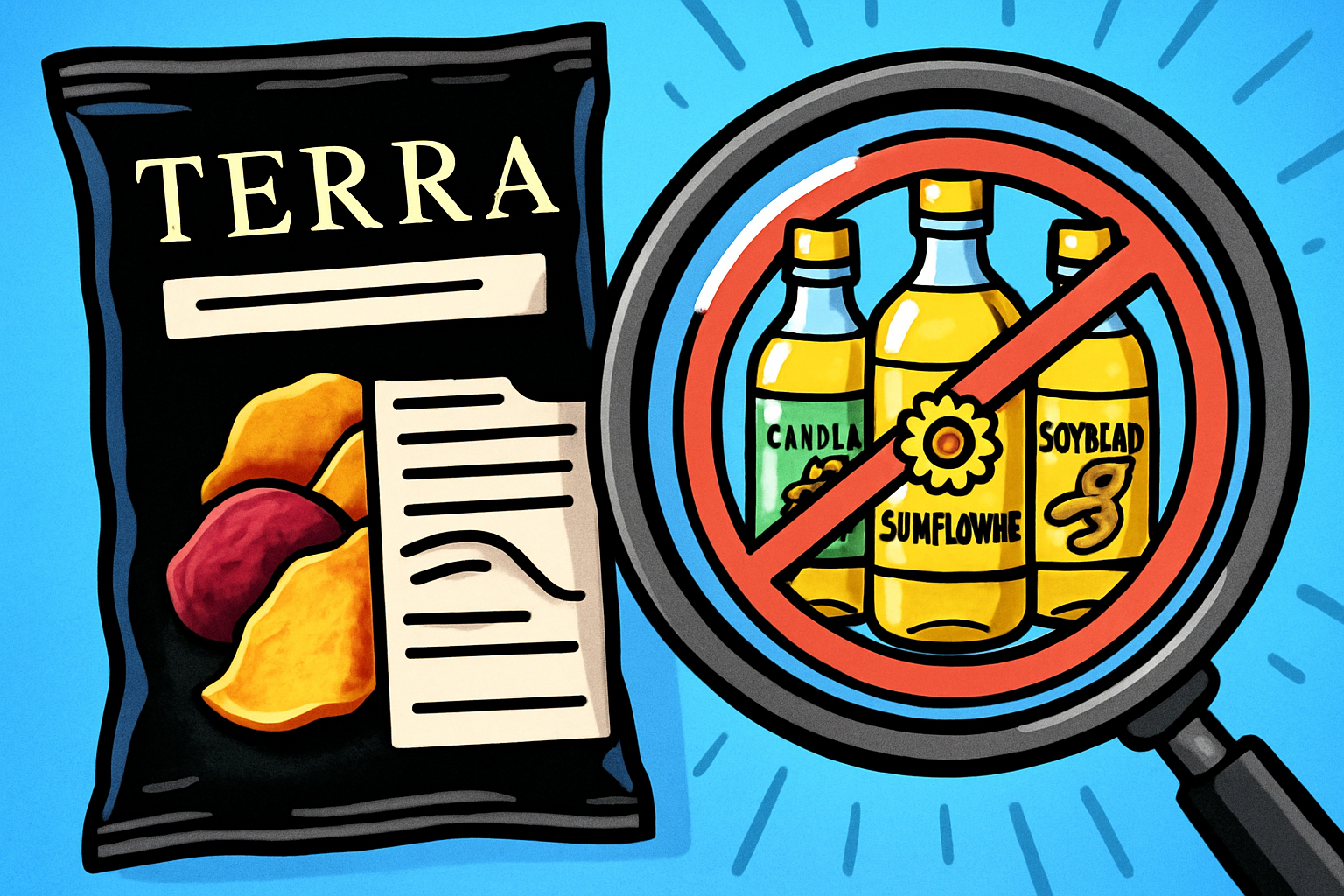
Yes, Terra Chips uses seed oils. Their vegetable chips are fried in canola oil and/or safflower oil, both of which are high in omega-6 linoleic acid. While Terra Chips markets itself as a healthier alternative to regular potato chips, the use of these industrial seed oils makes them problematic from a metabolic health perspective.
If you're trying to avoid seed oils, Terra Chips should be off your shopping list despite their "natural" branding and colorful vegetable varieties.
What Oils Does Terra Chips Use?
Terra Chips uses two primary seed oils in their products:
**Canola Oil**: This is rapeseed oil that's been heavily processed and refined. Canola oil contains about 20% omega-6 linoleic acid and is prone to oxidation during the high-heat frying process.
**Safflower Oil**: This seed oil is even worse, containing up to 78% omega-6 linoleic acid. Safflower oil is one of the most inflammatory oils commonly used in processed foods.
The ingredient list typically states "canola oil and/or safflower oil," meaning Terra uses whichever is cheaper or more available at the time of production. Both oils are problematic for the same reasons: they're highly processed industrial oils that didn't exist in the human diet until the 20th century.
These oils undergo extensive processing involving hexane extraction, bleaching, and deodorizing before they end up in your bag of Terra Chips. The high-heat frying process then creates even more oxidized compounds and lipid peroxidation products.
Full Ingredients Breakdown
A typical bag of Terra Original vegetable chips contains:
- Sweet potato
- Taro
- Parsnip
- Batata
- Canola oil and/or safflower oil
- Salt
While the vegetable selection is impressive and provides variety in nutrients and flavors, the cooking oil completely undermines any health benefits. The vegetables themselves are fine, but they're essentially vehicles for delivering oxidized omega-6 fatty acids.
Terra also makes other varieties like Terra Blues (blue potatoes) and Terra Sweets (sweet potato), but they all use the same problematic seed oil blend. The company's commitment to "real vegetables" doesn't extend to using traditional, stable cooking fats.
The irony is that Terra Chips could easily be a genuinely healthy snack if they switched to beef tallow, coconut oil, or even olive oil for frying. The vegetables provide nutrients like beta-carotene, potassium, and fiber, but the seed oils create inflammatory compounds that likely outweigh these benefits.
Are Terra Chips Healthy?
Despite their marketing as a premium, natural snack, Terra Chips are not particularly healthy due to their seed oil content.
**The Problems with Terra's Seed Oils:**
High omega-6 content creates an inflammatory response in the body. The average American already consumes 10-20 times more omega-6 than omega-3 fatty acids, and products like Terra Chips make this ratio even worse.
Oxidation during processing and storage creates harmful compounds. Seed oils are unstable and form aldehydes, lipid peroxides, and other toxic byproducts when exposed to heat, light, and air.
Linoleic acid disrupts cellular function. Research shows that excess linoleic acid can interfere with mitochondrial function and contribute to metabolic dysfunction.
**The Marketing vs. Reality:**
Terra positions itself as a better-for-you snack because it uses "real vegetables" instead of just potatoes. While vegetable variety is nice, it doesn't address the fundamental problem of using industrial seed oils.
The colorful packaging and premium pricing create a health halo effect, but the nutritional profile isn't significantly better than regular potato chips fried in similar oils. You're paying more for the same inflammatory fats.
Hain Celestial, Terra's parent company, markets many products as "natural" and "organic," but they consistently use seed oils across their product lines. This shows how even "health-focused" brands often miss the mark on ingredient quality.
Seed Oil Free Chip Alternatives
If you're craving crunchy snacks but want to avoid seed oils, here are better options:
**Boulder Canyon**: Available at Costco, these kettle chips are cooked in beef tallow. They're one of the few mainstream chip brands using traditional animal fats. The tallow provides stable saturated fats that don't oxidize during cooking.
**Jackson's Sweet Potato Chips**: These use coconut oil, which is stable at high temperatures and provides beneficial medium-chain triglycerides. The coconut oil doesn't create the inflammatory compounds that seed oils do.
**Siete Grain-Free Chips**: Made with avocado oil, these provide monounsaturated fats similar to olive oil. While not as stable as animal fats, avocado oil is much better than seed oils.
**Good Health Avocado Oil Chips**: Another avocado oil option that's widely available. The company specifically markets their avocado oil as a healthier alternative to conventional chip oils.
**Make Your Own**: The best option is making chips at home using
beef tallow or coconut oil. You can control the oil quality and avoid any processed ingredients.
Even better, consider shifting away from fried snacks altogether. Raw vegetables with clean dips, nuts, or grass-fed jerky provide nutrients without the inflammatory oils.
The Bottom Line
Terra Chips uses seed oils (canola and safflower oil) despite their premium positioning and vegetable variety. The colorful marketing can't hide the fact that these chips deliver the same inflammatory omega-6 fatty acids as conventional snack foods.
While Terra Chips aren't the worst offender in the snack aisle, they're definitely not a health food. The seed oils used in processing create oxidized compounds and contribute to the omega-6 overload that characterizes the modern American diet.
If you occasionally eat Terra Chips, it won't ruin your health, but they shouldn't be a regular part of your diet if you're trying to
avoid seed oils. The alternatives mentioned above provide similar satisfaction without the inflammatory baggage.
For navigating both restaurant meals and grocery shopping while avoiding seed oils,
Seed Oil Scout helps you find seed oil free restaurants AND scan grocery products with our barcode scanner. The app takes the guesswork out of ingredient analysis so you can make informed choices about what you're eating. 🫡