
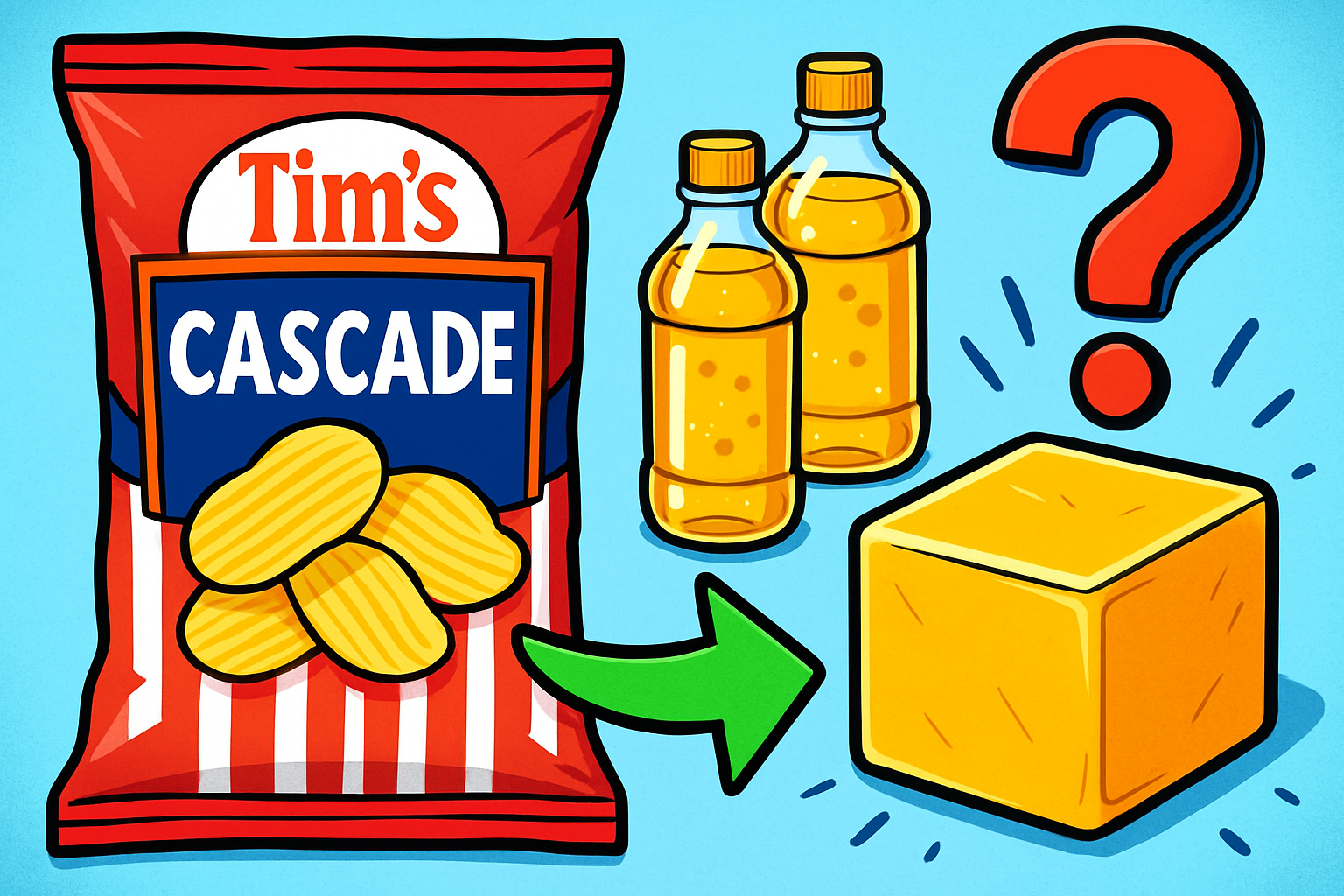
Does Tim's Cascade Use Beef Tallow? What They Use Instead
Quick Answer
No, Tim's Cascade does not use beef tallow in their potato chips. This Pacific Northwest brand, now owned by Utz Brands, fries their thick-cut kettle chips in cottonseed oil and/or corn oil instead. Both of these are seed oils high in inflammatory omega-6 fatty acids.
🛡️ Trying to avoid seed oils? Seed Oil Scout has you covered.
2M+ downloads. 23K+ five-star reviews. Verified restaurant and grocery data so you always know what you're eating.
If you're looking for chips fried in beef tallow, Boulder Canyon's tallow chips at Costco are your best bet. For other seed-oil-free options, Jackson's chips (coconut oil) and Siete chips (avocado oil) are solid alternatives.
Does Tim's Cascade Actually Use Beef Tallow?
Unfortunately, Tim's Cascade does not use beef tallow for frying their chips. Despite their "old-fashioned" kettle-cooked branding and Pacific Northwest roots, they follow the modern industrial food playbook of using cheap seed oils.
Tim's Cascade has been around since 1986, starting in Auburn, Washington. While they maintain their thick-cut, kettle-style cooking method that gives their chips that satisfying crunch, they've never made the switch to traditional animal fats like beef tallow.
This is particularly disappointing because kettle chips require high-heat frying, which is exactly where beef tallow shines. The brand's commitment to "quality ingredients" stops short of using the superior frying fat that was standard before the industrial seed oil revolution.
Since Utz Brands acquired Tim's Cascade, the ingredient list has remained consistent with seed oil usage. For a brand that prides itself on being different from mass-market chips, sticking with cottonseed and corn oil feels like a missed opportunity.
What Oil Does Tim's Cascade Use?
Tim's Cascade chips are fried in cottonseed oil and/or corn oil, according to their ingredient labels. Both of these fall squarely into the problematic seed oil category.
Cottonseed oil is particularly concerning because cotton isn't even a food crop. It's heavily pesticide-treated and contains natural toxins like gossypol that require extensive processing to remove. The oil extraction process involves hexane solvents and high heat, creating a highly processed industrial product.
Corn oil isn't much better. It's approximately 57% linoleic acid, an omega-6 fatty acid that becomes inflammatory when consumed in excess. Modern Americans consume roughly 20 times more omega-6 than our ancestors, largely thanks to seed oils in processed foods like chips.
The "and/or" labeling suggests Tim's Cascade switches between these oils based on cost and availability. This inconsistency means you never know exactly which problematic oil you're consuming with each bag.
Both oils are prone to oxidation and lipid peroxidation when heated to the high temperatures required for kettle chip frying. This creates harmful compounds that contribute to inflammation and oxidative stress in your body.
Why Beef Tallow Is Better for Chips
Beef tallow would be a dramatically superior choice for Tim's Cascade chips, both from a health and culinary perspective. Here's why this traditional fat outperforms seed oils:
First, tallow is remarkably heat-stable. With a smoke point around 420°F and a saturated fat content of about 50%, it can handle the high temperatures of kettle frying without breaking down into harmful compounds. Seed oils start oxidizing and forming toxic aldehydes at much lower temperatures.
The fatty acid profile of tallow is also far more balanced. While seed oils are loaded with inflammatory omega-6 linoleic acid, tallow contains mostly saturated and monounsaturated fats. This creates a much less inflammatory product that won't throw off your omega-6 to omega-3 ratio.
From a taste perspective, beef tallow creates an incredibly satisfying, rich flavor that enhances rather than masks the potato taste. McDonald's famous fries were legendary precisely because they were cooked in beef tallow until 1990. The flavor difference is unmistakable.
Tallow is also a traditional fat that humans have been consuming for thousands of years. Our bodies know how to process and utilize these familiar fats, unlike the industrially-created seed oils that only became common in the last century. You can learn more about tallow's health benefits in our detailed guide on beef tallow nutrition.
Where to Find Tallow Chips
Since Tim's Cascade doesn't use beef tallow, you'll need to look elsewhere for truly clean chips. Fortunately, there are a few excellent options available:
Boulder Canyon's Tallow Chips are the gold standard for clean potato chips. These are exclusively available at Costco and are fried in genuine beef tallow. They taste incredible and represent what chips should be: potatoes, salt, and a traditional cooking fat.
Jackson's Sweet Potato Chips use coconut oil instead of tallow, which is still a major upgrade from seed oils. Coconut oil is highly saturated and heat-stable, making it a solid choice for high-temperature frying.
Siete Chips are made with avocado oil, another seed-oil-free option. While not as traditional as tallow, avocado oil has a high smoke point and better fatty acid profile than industrial seed oils.
For the ultimate chip experience, some people make their own using beef tallow at home. You can slice potatoes, fry them in quality tallow, and create chips that rival any commercial product. Our comparison guide explains exactly why tallow outperforms vegetable oils for cooking.
The Bigger Picture on Tim's Cascade
Tim's Cascade's seed oil usage isn't unique to just their chips. If you're wondering about their broader ingredient practices, our article on whether Tim's Cascade uses seed oils covers their entire product line.
The reality is that most mainstream chip brands, even the "premium" ones, still rely on cheap industrial oils. This represents a massive shift from just a few decades ago, when animal fats were the standard for high-quality fried foods.
Understanding these ingredient choices helps you make better decisions about which brands to support. Companies that use traditional fats like tallow deserve your business, while those sticking with seed oils are prioritizing cost savings over consumer health.
The Bottom Line
Tim's Cascade does not use beef tallow in their potato chips. Instead, they rely on cottonseed oil and corn oil, both problematic seed oils that contribute to inflammation and oxidative stress.
If you're serious about avoiding seed oils, skip Tim's Cascade and head to Costco for Boulder Canyon's tallow chips instead. These represent what potato chips should be: simple ingredients including traditional beef tallow for frying.
For other seed-oil-free options, Jackson's (coconut oil) and Siete (avocado oil) chips are solid alternatives that won't derail your clean eating goals.
Making these switches might seem small, but they add up. Every bag of tallow chips you choose over seed oil chips is a vote for traditional food preparation and better health outcomes.
Ready to make seed oil avoidance easier? Download Seed Oil Scout to find seed oil free restaurants AND scan grocery products with our barcode scanner. The app takes the guesswork out of clean eating, whether you're dining out or shopping for snacks like chips. 🫡