
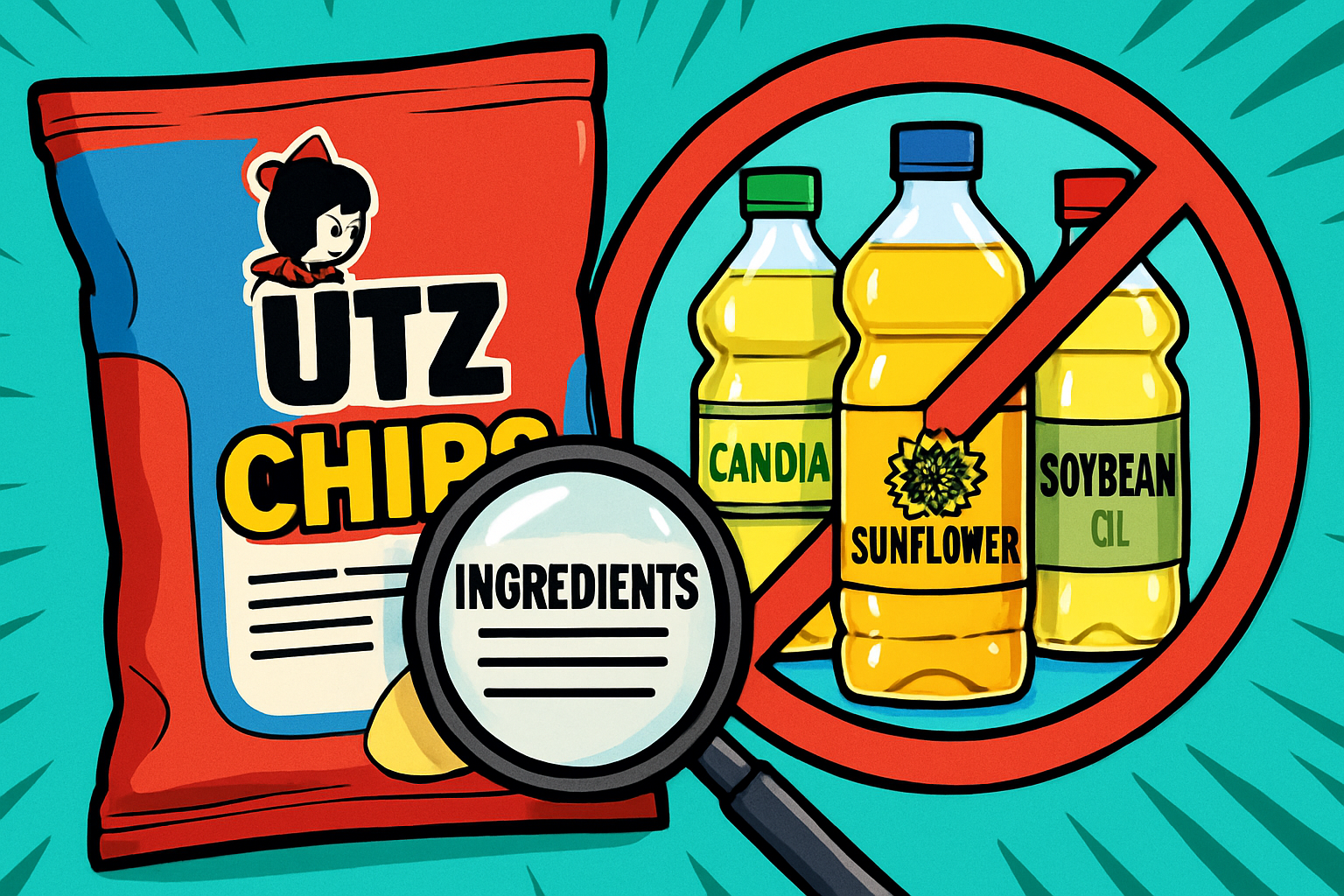
Does Utz Use Seed Oils? Ingredients Breakdown
Quick Answer
Yes, Utz uses seed oils in most of their potato chip products. The brand primarily relies on cottonseed oil, sunflower oil, and canola oil across their product lines. These are all high omega-6 seed oils that undergo heavy industrial processing and contain inflammatory linoleic acid.
🛡️ Trying to avoid seed oils? Seed Oil Scout has you covered.
2M+ downloads. 23K+ five-star reviews. Verified restaurant and grocery data so you always know what you're eating.
While Utz is a beloved regional snack brand with a long history, their cooking oils put them squarely in the seed oil category. The only exception is their pork rinds line, which uses lard (a traditional animal fat).
What Oils Does Utz Use?
Utz Brands uses several different seed oils depending on the specific product line:
Primary cooking oils:
- Cottonseed oil (most common across chip varieties)
- Sunflower oil (select products)
- Canola oil (certain flavored varieties)
All three of these oils are considered seed oils due to their high linoleic acid content and industrial extraction methods. Cottonseed oil is particularly concerning since cotton is heavily sprayed with pesticides and isn't even technically a food crop.
The specific oil used can vary by product line and even by manufacturing facility. Utz sources oils based on availability and cost, which is standard practice for large snack manufacturers.
Full Ingredients Breakdown
Let's examine the ingredient lists for popular Utz products:
Classic Utz Potato Chips
Ingredients: Potatoes, cottonseed oil and/or sunflower oil, salt
The "and/or" language indicates Utz switches between oils based on supply and pricing. Both cottonseed and sunflower oils contain 50-70% linoleic acid, making them highly inflammatory when consumed regularly.
Utz Kettle Chips
Ingredients: Potatoes, sunflower oil or cottonseed oil, salt
Even their "premium" kettle-cooked varieties use the same problematic seed oils. The kettle cooking process doesn't change the fundamental issue with the oil choice.
Utz Flavored Varieties
Barbecue, sour cream & onion, and other flavored chips often include canola oil in addition to cottonseed or sunflower oil. Canola oil adds another layer of processing and genetic modification concerns.
Utz Pork Rinds (The Exception)
Ingredients: Pork rinds, salt
Utz pork rinds are actually cooked in their own rendered pork fat (lard), making them one of the few seed oil-free options in their entire product lineup. This traditional cooking method is exactly what we want to see.
Are Utz Chips Healthy?
From a seed oil perspective, most Utz chips are not healthy due to their oil choices. Here's why these oils are problematic:
High Omega-6 Content
Cottonseed, sunflower, and canola oils are all extremely high in omega-6 fatty acids, specifically linoleic acid. Modern diets already contain 10-20 times more omega-6s than our ancestors consumed, driving chronic inflammation.
Industrial Processing
These oils require heavy chemical processing including:
- Hexane extraction (a petroleum-derived solvent)
- High-heat deodorization
- Chemical bleaching
- Degumming with phosphoric acid
This processing creates trans fats and oxidized compounds that weren't present in the original seeds.
Oxidation and Rancidity
Polyunsaturated fats in seed oils are highly unstable. When heated during frying, they form toxic compounds like aldehydes and advanced lipid oxidation end products (ALEs). These compounds have been linked to metabolic dysfunction and cardiovascular disease.
Pesticide Residues
Cottonseed oil is particularly concerning because cotton crops receive some of the heaviest pesticide applications of any crop. Since cotton isn't grown for human consumption, there are fewer restrictions on chemical treatments.
The simple ingredient list of "potatoes, oil, salt" might seem clean, but the devil is in the details of which oil is used.
Seed Oil Free Chip Alternatives
Fortunately, several brands are returning to traditional cooking fats and oils:
Boulder Canyon (Costco Exclusive)
Boulder Canyon makes beef tallow potato chips exclusively available at Costco. These chips use grass-fed beef tallow, which is rich in stable saturated fats and fat-soluble vitamins. Beef tallow was the standard frying fat for most of human history.
Jackson's Honest
This brand cooks their chips in coconut oil, which is over 90% saturated fat and extremely stable at high temperatures. Their sweet potato chips are particularly popular among health-conscious consumers.
Siete Foods
Siete uses avocado oil for their grain-free chips. While avocado oil contains some polyunsaturated fats, it's predominantly monounsaturated and much more stable than seed oils.
Good Health
Their avocado oil kettle chips offer a crunchy alternative without the inflammatory seed oils. The company also makes olive oil varieties.
Make Your Own
The best option is making chips at home using beef tallow, duck fat, or coconut oil. You'll get superior nutrition and taste while avoiding all the industrial additives.
Restaurant-wise, some establishments are returning to traditional fats for frying. Avoiding seed oils at restaurants requires knowing which places use animal fats or more stable plant oils.
The Bottom Line
Utz chips contain multiple seed oils that contribute to the modern epidemic of chronic inflammation and metabolic dysfunction. While the brand has regional loyalty and nostalgic appeal, their oil choices align with industrial food production rather than human health.
The exception is their pork rinds, which use traditional lard and represent what snack foods looked like before the seed oil revolution of the mid-20th century.
For regular chip consumption, seek out brands that use beef tallow, coconut oil, or avocado oil. Your omega-6 to omega-3 ratio (and your metabolic health) will thank you.
Want to make better choices when dining out and shopping? Seed Oil Scout helps you find seed oil free restaurants AND scan grocery products with our barcode scanner. Download the app to take the guesswork out of avoiding inflammatory oils. 🫡