
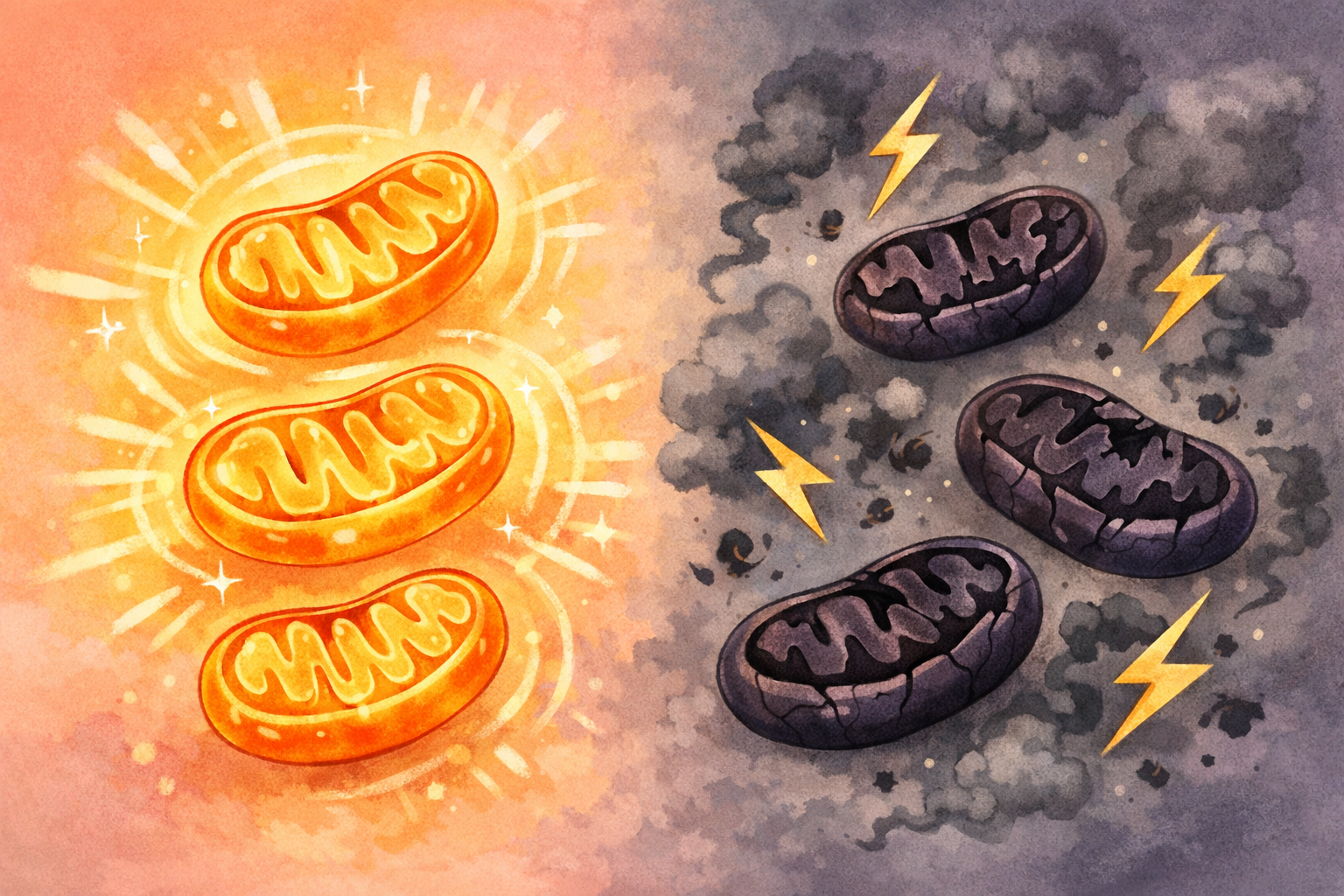
How Seed Oils Damage Your Mitochondria: The Cellular Energy Crisis
Your cells are like tiny power plants, and mitochondria are their generators. But what happens when you fuel these generators with the wrong type of oil? The answer lies in understanding how industrial seed oils—particularly their high linoleic acid content—systematically damage your cellular energy production at the molecular level.
The Mitochondrial Energy Factory
Mitochondria produce approximately 90% of your body's energy in the form of ATP (adenosine triphosphate). These organelles contain five protein complexes that work together in what's called the electron transport chain. Think of it as an assembly line where electrons get passed from one worker to the next, ultimately producing the energy currency your cells need to function.
🛡️ Trying to avoid seed oils? Seed Oil Scout has you covered.
2M+ downloads. 23K+ five-star reviews. Verified restaurant and grocery data so you always know what you're eating.
The inner mitochondrial membrane, where this energy production occurs, is composed of roughly 20% cardiolipin—a unique phospholipid that's essential for optimal mitochondrial function. Here's where things get interesting: cardiolipin's fatty acid composition directly reflects your dietary fat intake.
Linoleic Acid: The Molecular Saboteur
Linoleic acid (LA) is an omega-6 polyunsaturated fatty acid that makes up 50-80% of most industrial seed oils. When you consume high amounts of LA from sources like soybean, corn, or sunflower oil, it gets incorporated into your mitochondrial membranes, including cardiolipin.
The problem? LA is highly susceptible to oxidation due to its two double bonds. When cardiolipin becomes enriched with LA instead of more stable fatty acids, it turns into a ticking time bomb for oxidative damage. Research published in the Journal of Lipid Research found that LA-enriched cardiolipin is 10 times more susceptible to peroxidation than cardiolipin containing saturated or monounsaturated fatty acids.
This oxidative damage triggers a cascade of mitochondrial dysfunction:
- Decreased ATP production: Damaged cardiolipin can't properly support the electron transport chain proteins
- Increased reactive oxygen species (ROS): Dysfunctional mitochondria leak more free radicals
- Mitochondrial membrane permeabilization: Leading to cell death signals
- Impaired mitochondrial biogenesis: Your body struggles to create new, healthy mitochondria
The 4-HNE Connection
When LA oxidizes, it doesn't just disappear—it transforms into toxic aldehydes, with 4-hydroxynonenal (4-HNE) being one of the most damaging. This molecule is so reactive that researchers use it as a biomarker for oxidative stress and cellular damage.
4-HNE directly attacks mitochondrial proteins and DNA. A study from the Free Radical Biology and Medicine journal demonstrated that 4-HNE accumulation in mitochondria correlates with:
- 50% reduction in Complex I activity
- 40% decrease in Complex IV function
- Significant mitochondrial DNA mutations
These aren't just numbers—they translate to real symptoms like chronic fatigue, brain fog, and accelerated aging.
The Calcium Catastrophe
Healthy mitochondria carefully regulate calcium levels. But LA-damaged mitochondria lose this ability, creating what researchers call the "mitochondrial permeability transition pore" (mPTP). When this pore opens inappropriately, calcium floods in, triggering mitochondrial swelling and eventual cell death.
Dr. Peat's research on mitochondrial respiration showed that animals fed high-LA diets had mitochondria that required 3-4 times more calcium to trigger the mPTP compared to those fed saturated fats. This increased sensitivity means your cells are constantly on the edge of an energy crisis.
The Metabolic Domino Effect
Mitochondrial dysfunction doesn't stay confined to individual cells. It creates a metabolic domino effect throughout your body:
Insulin Resistance: Damaged mitochondria can't properly metabolize glucose, forcing cells to become insulin resistant as a protective mechanism. A 2019 study in Cell Metabolism found that reducing dietary LA improved mitochondrial function and insulin sensitivity within 8 weeks.
Inflammation Amplification: Dysfunctional mitochondria release damage-associated molecular patterns (DAMPs) that trigger inflammatory responses. This creates a vicious cycle where inflammation further damages mitochondria.
Fatty Liver Development: When liver mitochondria can't properly oxidize fats due to LA damage, fat accumulates in liver cells. Research shows that high-LA diets increase liver fat accumulation by up to 55% compared to saturated fat diets.
The Generational Impact
Perhaps most concerning is that mitochondrial damage can be inherited. Maternal mitochondria pass directly to offspring, meaning that a mother's high seed oil consumption can predispose her children to metabolic dysfunction. Animal studies demonstrate that high-LA maternal diets result in offspring with:
- 25% lower mitochondrial efficiency
- Increased obesity risk
- Higher inflammation markers from birth
Reversing the Damage
The good news? Mitochondrial membranes turn over relatively quickly—within 2-4 weeks. This means reducing seed oil intake can rapidly improve mitochondrial function. Studies show that switching from high-LA oils to saturated and monounsaturated fats results in:
- 30% improvement in mitochondrial respiration within 6 weeks
- Reduced oxidative stress markers
- Enhanced cellular energy production
- Better exercise tolerance and recovery
The key is consistency. Every meal without seed oils is a step toward healthier mitochondria. Focus on whole foods cooked in stable fats like butter, ghee, coconut oil, or beef tallow.
Practical Steps for Mitochondrial Recovery
Beyond eliminating seed oils, several strategies can accelerate mitochondrial healing:
Time-restricted eating: Fasting periods allow mitochondria to clear out damaged components through a process called mitophagy.
Cold exposure: Brief cold stress stimulates mitochondrial biogenesis and improves their efficiency.
Strategic supplementation: CoQ10, PQQ, and NAD+ precursors support mitochondrial function, though they can't overcome continued LA exposure.
Movement variety: Both high-intensity intervals and low-level aerobic activity promote healthy mitochondrial adaptation.
Take Control of Your Cellular Health
Understanding how seed oils damage your mitochondria empowers you to make informed choices about what you eat. Every time you choose a restaurant meal, you're either supporting or sabotaging your cellular energy production.
That's where Seed Oil Scout becomes your essential dining companion. Our app helps you quickly identify seed oil-free options at thousands of restaurants, making it simple to protect your mitochondria while enjoying meals out. Download Seed Oil Scout today and start fueling your cells with the right fats—because your mitochondria deserve better than industrial seed oils.