
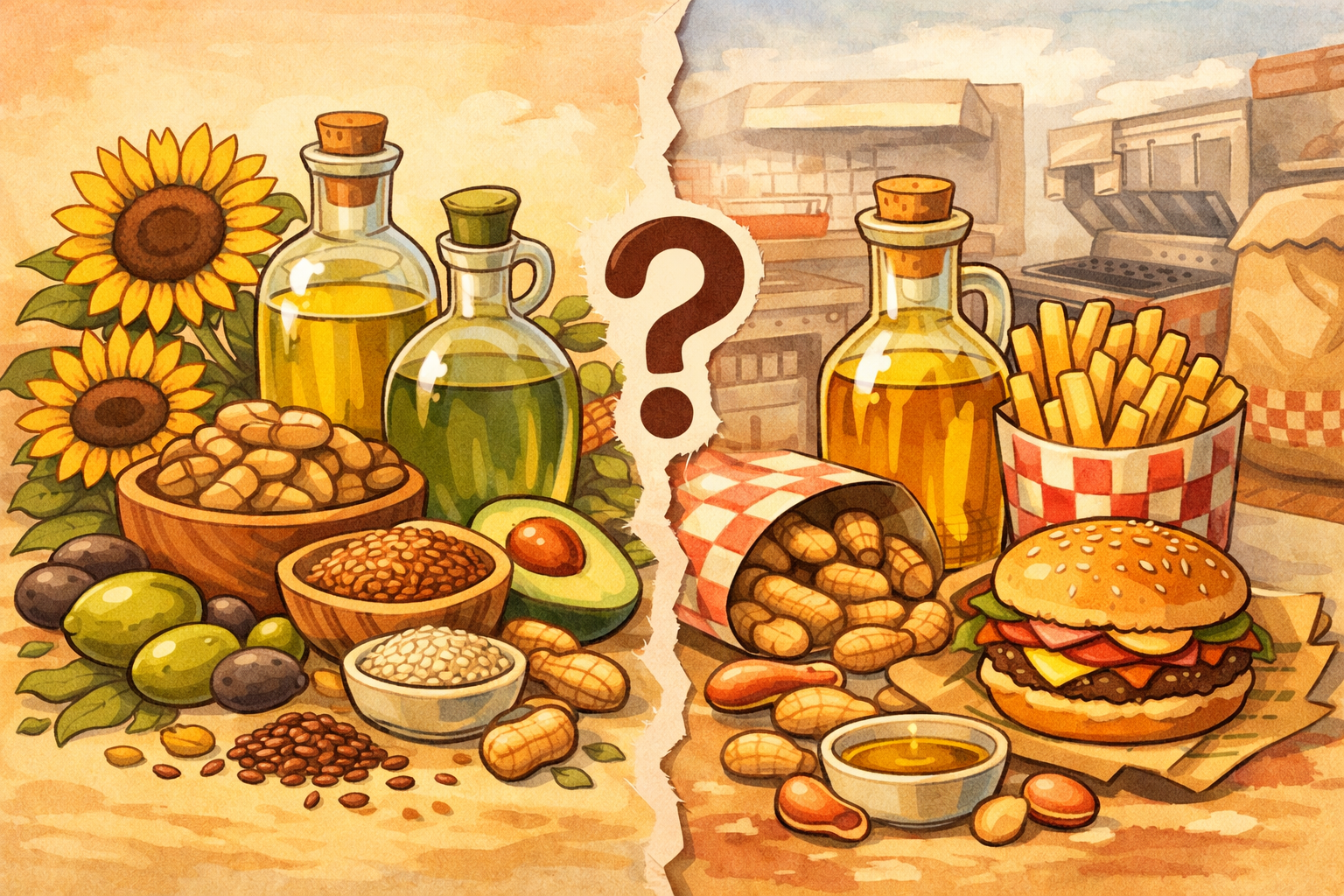
Is Peanut Oil Really a Seed Oil? The Five Guys Exception Explained
Walk into any Five Guys location and you'll notice something different about their fries. They're crispy, golden, and cooked in 100% peanut oil—a point the chain proudly advertises. But here's where things get confusing for anyone trying to avoid inflammatory seed oils: peanuts grow underground, not on trees. So what exactly makes peanut oil the exception that health-conscious diners actually seek out?
The answer lies in a botanical technicality that has real-world implications for your health. While peanuts are technically legumes (like beans and peas), peanut oil behaves very differently from the industrial seed oils that dominate restaurant kitchens. Understanding this distinction could change how you navigate dining out—and why Five Guys has become an unexpected ally for seed oil avoiders.
Curious about which restaurants near you are cooking with inflammatory oils? The Seed Oil Scout app tracks cooking oils at thousands of locations nationwide, so you can make informed choices before you order.
The Botanical Truth About Peanuts
Despite their name, peanuts aren't nuts at all. They're legumes that grow underground in pods, more closely related to soybeans than to tree nuts like almonds or walnuts. This botanical classification matters because it affects the oil's fatty acid profile and how your body processes it.
🛡️ Trying to avoid seed oils? Seed Oil Scout has you covered.
2M+ downloads. 23K+ five-star reviews. Verified restaurant and grocery data so you always know what you're eating.
Real tree nuts and seeds that grow above ground typically require intensive industrial processing to extract their oils. Think about how much pressure and chemical processing it takes to squeeze oil from tiny sunflower seeds or rapeseed (canola). Peanuts, on the other hand, are naturally oil-rich and require minimal processing to extract their oil—similar to olives or coconuts.
This processing difference is crucial. The high-heat, chemical-intensive methods used to extract oils from small seeds and grains create oxidation and trans fats that don't exist in naturally oil-rich sources. When food manufacturers process sunflower seeds, corn, or soybeans into oil, they're essentially forcing oil out of ingredients that weren't meant to be oil sources.
Why Peanut Oil Gets a Health Pass
The fatty acid composition of peanut oil tells a completely different story than inflammatory seed oils. While soybean oil contains roughly 50-60% inflammatory omega-6 linoleic acid, peanut oil contains only about 20-30%. The majority of peanut oil—around 50%—consists of monounsaturated oleic acid, the same heart-healthy fat found in olive oil.
This matters because excessive omega-6 consumption, particularly from processed seed oils, has been linked to increased inflammation in multiple studies. A 2018 study published in the journal Nutrients found that the dramatic increase in dietary omega-6 intake over the past century correlates with rising rates of inflammatory diseases.
Peanut oil also has excellent stability at high temperatures. Its smoke point reaches around 450°F, making it ideal for deep frying without breaking down into harmful compounds. Compare this to many seed oils, which begin oxidizing and forming toxic aldehydes well before reaching optimal frying temperatures.
The minimal processing required for peanut oil extraction means it retains beneficial compounds like vitamin E and resveratrol—antioxidants that actually help protect against the oxidative stress that seed oils promote.
The Five Guys Advantage
Five Guys didn't choose peanut oil by accident. The chain's commitment to peanut oil stems from both flavor and health considerations that set them apart from competitors drowning everything in soybean or canola oil.
Their peanut oil is refined, which removes the proteins that cause allergic reactions while preserving the beneficial fatty acid profile. This means even most people with peanut allergies can safely consume food cooked in refined peanut oil, according to Food Allergy Research & Education (FARE).
The taste difference is immediately noticeable. Peanut oil has a clean, neutral flavor that doesn't compete with the food, unlike seed oils that can leave a slightly bitter or metallic aftertaste. More importantly, peanut oil doesn't go rancid as quickly as polyunsaturated seed oils, meaning your fries aren't swimming in oxidized, inflammatory compounds.
Five Guys uses peanut oil for all their frying, including french fries and onion rings. Their burgers are cooked on a flat-top grill, typically without added oils. This makes Five Guys one of the cleanest fast-casual options for seed oil avoiders—a rarity in the restaurant industry.
The Seed Oil Scout Perspective
When we evaluate restaurants for seed oil content, we look beyond simple ingredient lists to understand the bigger picture of inflammatory potential. Peanut oil consistently ranks as one of the most acceptable cooking oils for several reasons:
Processing method: Mechanical extraction rather than chemical solvents
Oxidative stability: Resists rancidity and breakdown under heat
Inflammatory profile: Lower omega-6 content than typical seed oils
Additive concerns: Usually single-ingredient, unlike blended "vegetable" oils
However, we maintain a critical eye toward all restaurant oils. Even peanut oil isn't perfect—it's still processed and lacks the robust antioxidant profile of extra virgin olive oil or grass-fed animal fats. But in the context of dining out, where your choices are often limited to various industrial oils, peanut oil represents a significantly better option.
Beyond Five Guys: Finding Peanut Oil in Restaurants
Five Guys isn't the only chain using peanut oil, but they're among the most transparent about it. Some other restaurants cook with peanut oil, though many don't advertise it as prominently.
The challenge lies in identifying these establishments. Restaurant websites rarely list cooking oils clearly, and staff often don't know what oil the kitchen uses. Many restaurants have switched from peanut oil to cheaper soybean or canola blends over the years, making assumptions dangerous.
This opacity is exactly why detailed restaurant oil databases have become essential tools. Corporate claims about "heart-healthy" cooking oils often mask the reality of inflammatory seed oil use throughout their operations.
Regional chains like Shake Shack, In-N-Out, and Whataburger each have different oil policies across their locations. The Seed Oil Scout app tracks these variations, including which locations have made recent changes to their cooking oil sourcing.
Making Informed Restaurant Choices
Understanding the peanut oil exception helps explain why some health-conscious diners specifically seek out certain restaurants while avoiding others. It's not about perfection—it's about making the best choices available within realistic constraints.
When you're trying to avoid inflammatory seed oils while dining out, peanut oil represents a reasonable compromise. It won't provide the benefits of cooking at home with grass-fed tallow or extra virgin olive oil, but it also won't flood your system with the industrial omega-6 oils found in most restaurant foods.
The key is having accurate information about what each restaurant actually uses, not what their marketing materials suggest. Corporate wellness messaging rarely aligns with ingredient reality, especially when it comes to cooking oils.
Ready to navigate restaurants with confidence? Download the Seed Oil Scout app to access our comprehensive database of restaurant cooking oils. We've done the detective work on thousands of locations so you can enjoy dining out without compromising your health goals. Your inflammatory markers will thank you.