
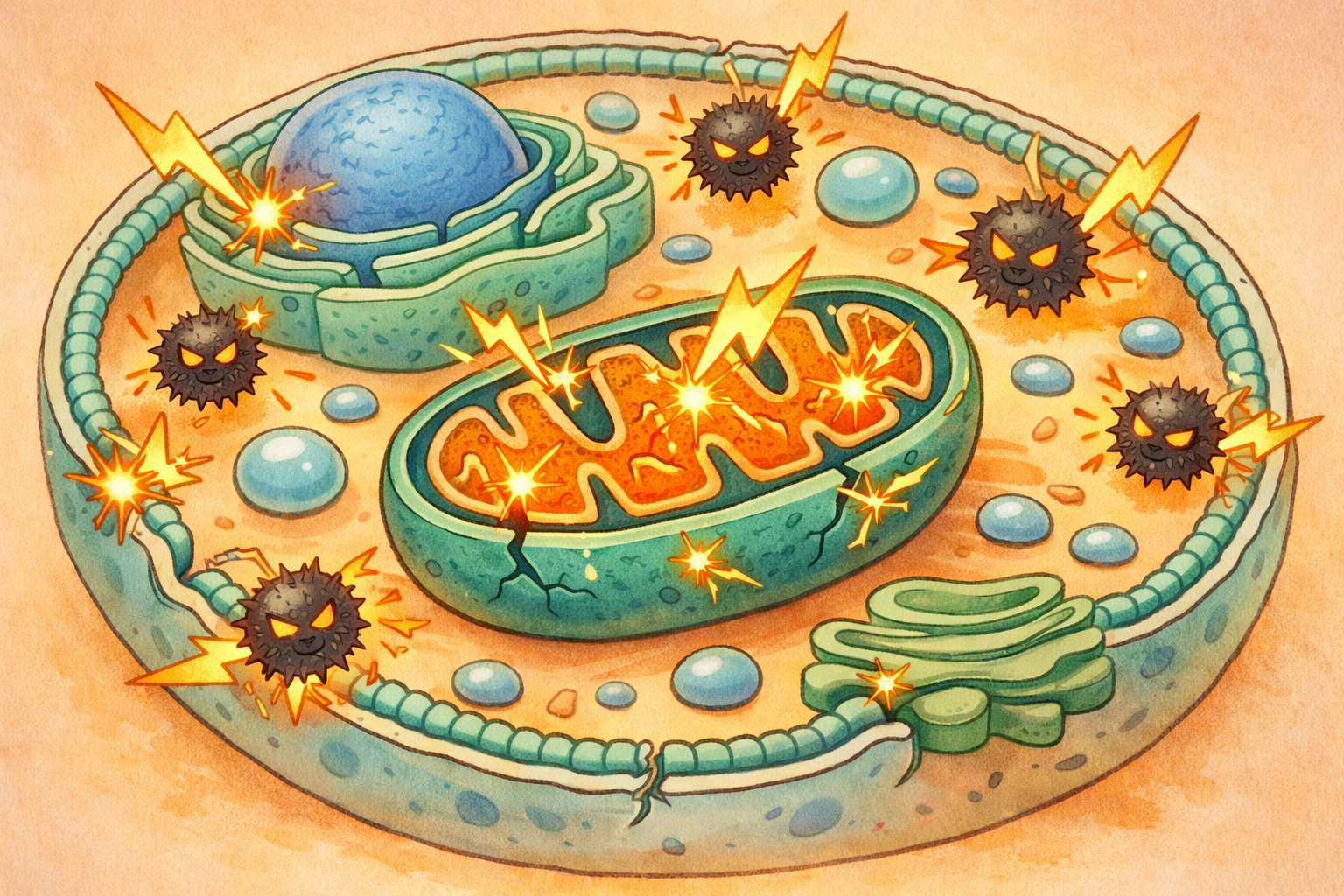
How Seed Oils Create Oxidative Stress: The Hidden Cellular Damage
Every time you consume seed oils, you're introducing highly unstable molecules into your body that can wreak havoc at the cellular level. These industrial oils—including canola, soybean, corn, and sunflower—contain high levels of polyunsaturated fatty acids (PUFAs) that are particularly vulnerable to oxidation. Understanding this process isn't just academic curiosity; it's crucial for making informed decisions about what you put in your body.
The Molecular Structure Problem
Seed oils are predominantly composed of omega-6 polyunsaturated fatty acids, particularly linoleic acid, which makes up 50-80% of most common seed oils. The "polyunsaturated" designation refers to multiple double bonds in their molecular structure. While this might sound harmless, these double bonds are actually the Achilles' heel of these fats.
🛡️ Trying to avoid seed oils? Seed Oil Scout has you covered.
2M+ downloads. 23K+ five-star reviews. Verified restaurant and grocery data so you always know what you're eating.
Each double bond creates a kink in the fatty acid chain and represents a point of vulnerability. These bonds are highly reactive to oxygen, heat, and light—which is why seed oils can go rancid so quickly. When you consume these oils, you're essentially introducing ticking time bombs into your cellular membranes.
Compare this to saturated fats like those found in butter or coconut oil, which have no double bonds and are therefore stable and resistant to oxidation. Even monounsaturated fats like olive oil, with just one double bond, are significantly more stable than their polyunsaturated counterparts.
The Oxidation Chain Reaction
When polyunsaturated fats encounter reactive oxygen species (ROS) in your body—which happens constantly as part of normal metabolism—they undergo lipid peroxidation. This process unfolds in three devastating stages:
Initiation: A free radical steals an electron from a polyunsaturated fatty acid, creating a lipid radical. This happens most readily at the carbon atoms adjacent to double bonds.
Propagation: The newly formed lipid radical reacts with oxygen to form a lipid peroxyl radical, which then attacks another polyunsaturated fatty acid, stealing its electron. This creates a chain reaction that can damage hundreds of molecules from a single initiating event.
Termination: The chain reaction eventually ends when two radicals react with each other, but not before producing toxic byproducts including malondialdehyde (MDA) and 4-hydroxynonenal (4-HNE).
Research published in Free Radical Biology and Medicine demonstrates that 4-HNE, one of the most toxic byproducts, can damage proteins, DNA, and cellular structures. Elevated levels of 4-HNE have been found in patients with Alzheimer's disease, atherosclerosis, and various cancers.
Cellular Membrane Disruption
Your cell membranes are composed of a phospholipid bilayer—essentially a double layer of fats that protects the cell and controls what enters and exits. When you consume seed oils, these polyunsaturated fats get incorporated into your cell membranes, replacing more stable fats.
This incorporation fundamentally alters membrane properties. Membranes become more fluid and permeable, which might sound beneficial but actually compromises cellular integrity. More importantly, these PUFA-rich membranes are now susceptible to oxidative damage.
When lipid peroxidation occurs in cell membranes, it creates literal holes in the cellular barrier. This allows calcium ions to flood into the cell, triggering cell death pathways. Additionally, the oxidation products can cross-link proteins in the membrane, further disrupting normal cellular function.
A study in the Journal of Lipid Research found that cells with higher PUFA content in their membranes showed significantly increased markers of oxidative stress and were more likely to undergo apoptosis (programmed cell death) when exposed to mild stressors.
Mitochondrial Dysfunction
Perhaps nowhere is oxidative damage more consequential than in your mitochondria—the powerhouses of your cells. Mitochondria are particularly vulnerable to oxidative stress because they're the primary site of oxygen consumption and reactive oxygen species production.
When seed oils are metabolized, they generate excessive amounts of reactive oxygen species compared to saturated fats. This overwhelms the mitochondria's antioxidant defenses, leading to damage of mitochondrial DNA, proteins, and the inner mitochondrial membrane.
Damaged mitochondria produce less ATP (cellular energy) and generate even more reactive oxygen species, creating a vicious cycle. This mitochondrial dysfunction has been implicated in everything from chronic fatigue to neurodegenerative diseases.
Research from the Proceedings of the National Academy of Sciences showed that mice fed high-PUFA diets had significantly impaired mitochondrial function compared to those fed saturated fat-rich diets, even when caloric intake was identical.
The Inflammatory Cascade
Oxidative stress doesn't exist in isolation—it triggers a cascade of inflammatory responses. When cells detect oxidative damage, they activate nuclear factor-kappa B (NF-κB), often called the "master regulator" of inflammation.
NF-κB activation leads to the production of pro-inflammatory cytokines including tumor necrosis factor-alpha (TNF-α), interleukin-1 beta (IL-1β), and interleukin-6 (IL-6). These inflammatory mediators don't just cause local inflammation; they can travel throughout the body, promoting systemic inflammation.
Additionally, the oxidation products of omega-6 fatty acids serve as precursors to pro-inflammatory eicosanoids. These signaling molecules promote vasoconstriction, platelet aggregation, and further inflammation—setting the stage for cardiovascular disease.
A landmark study in the American Journal of Clinical Nutrition found that individuals with the highest dietary intake of omega-6 PUFAs had significantly elevated markers of systemic inflammation, including C-reactive protein (CRP) and IL-6.
Depleting Your Antioxidant Reserves
Your body has sophisticated antioxidant systems designed to neutralize free radicals and repair oxidative damage. These include enzymatic antioxidants like superoxide dismutase, catalase, and glutathione peroxidase, as well as non-enzymatic antioxidants like vitamin E, vitamin C, and glutathione.
However, the massive oxidative burden created by seed oil consumption can overwhelm these defenses. Vitamin E, in particular, gets depleted rapidly when trying to protect polyunsaturated fats from oxidation. Studies show that increasing PUFA intake requires proportionally more vitamin E just to maintain baseline antioxidant status.
This depletion leaves other cellular components vulnerable to oxidative damage. It's like using all your firefighters to combat a blaze in one building while fires start breaking out across the entire city.
The Cumulative Effect
The truly insidious aspect of seed oil-induced oxidative stress is its cumulative nature. Unlike acute toxins that cause immediate, obvious damage, the effects of chronic oxidative stress build slowly over years or decades.
Each meal containing seed oils adds to your body's oxidative burden. Over time, this leads to accelerated aging, increased disease risk, and decreased cellular resilience. The half-life of linoleic acid in adipose tissue is approximately 680 days, meaning the seed oils you consume today will continue generating oxidative stress for nearly two years.
This explains why populations that have recently adopted Western diets high in seed oils show rapidly increasing rates of chronic diseases that were previously rare. The oxidative damage accumulates until it overwhelms the body's repair mechanisms.
Protecting Your Cells
Understanding how seed oils create oxidative stress empowers you to make better dietary choices. By avoiding these industrial oils and choosing stable, traditional fats, you can dramatically reduce your cellular oxidative burden.
Focus on consuming saturated fats from grass-fed animals, coconut oil, and modest amounts of monounsaturated fats from sources like olive oil and avocados. These fats integrate into your cell membranes without creating vulnerability to oxidation.
Additionally, supporting your antioxidant systems through nutrient-dense whole foods—not supplements—helps your body cope with unavoidable oxidative stressors. Foods rich in polyphenols, vitamin E, and other antioxidants can help mitigate damage when exposure to seed oils is unavoidable.
Making these changes isn't always easy, especially when eating out. That's where tools like Seed Oil Scout become invaluable. Our app helps you quickly identify restaurants that cook with healthy fats, making it simple to avoid seed oils even when you're not cooking at home. With crowd-sourced data from health-conscious diners and direct verification from restaurants, you can confidently choose where to eat without compromising your cellular health. Download Seed Oil Scout today and take control of your oxidative stress levels, one meal at a time.