
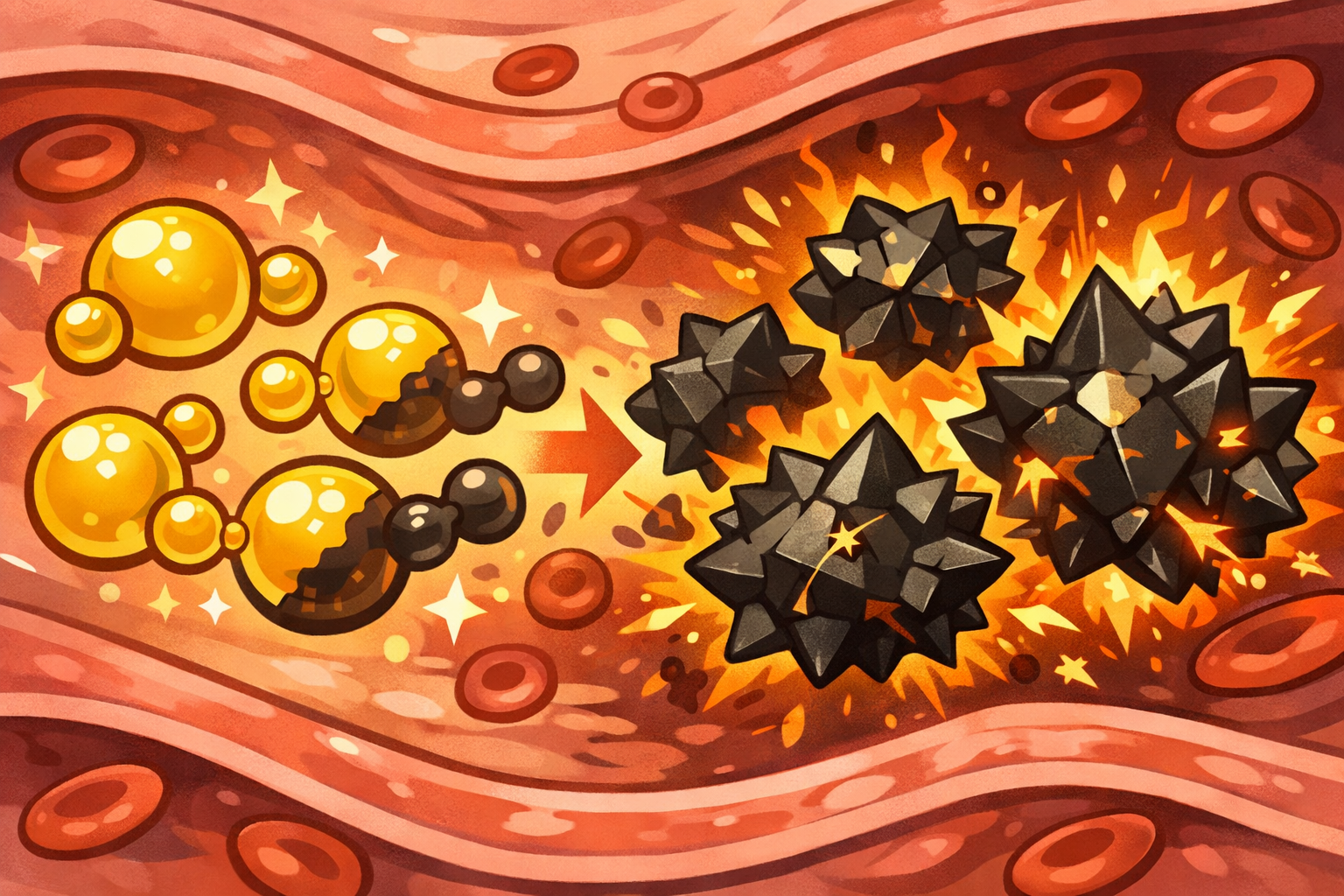
The Hidden Link Between Seed Oils, Oxidized LDL, and Chronic Inflammation
The Oxidation Chain Reaction: From Seed Oils to Damaged Arteries
Your LDL cholesterol numbers might look fine on paper, but there's something your standard lipid panel doesn't reveal: whether those LDL particles are oxidized time bombs floating through your bloodstream. The culprit behind this oxidation? The industrial seed oils hiding in nearly every restaurant meal and processed food.
🛡️ Trying to avoid seed oils? Seed Oil Scout has you covered.
2M+ downloads. 23K+ five-star reviews. Verified restaurant and grocery data so you always know what you're eating.
When polyunsaturated fatty acids (PUFAs) from seed oils integrate into your LDL particles, they create a perfect storm for oxidation. These unstable fats are 20-40 times more likely to oxidize than saturated fats, transforming benign cholesterol carriers into inflammatory agents that damage arterial walls.
Understanding the Chemistry of Oxidized LDL
LDL particles aren't inherently harmful—they're simply cholesterol transporters doing their job. Problems arise when the fatty acids within these particles become oxidized. Here's what happens:
Seed oils like soybean, corn, and canola contain high levels of linoleic acid, an omega-6 PUFA with multiple double bonds. These double bonds are chemically unstable, making them vulnerable to attack by free radicals. When you consume seed oils, linoleic acid incorporates into your cell membranes and LDL particles.
Inside your body, these unstable fats undergo lipid peroxidation—a chain reaction that produces toxic aldehydes like 4-hydroxynonenal (4-HNE) and malondialdehyde (MDA). Research shows that people consuming high amounts of seed oils have 3-4 times higher levels of these oxidation markers in their blood.
The Inflammatory Cascade: How Oxidized LDL Triggers Disease
Once LDL particles become oxidized, your immune system no longer recognizes them as normal. Instead, it treats them as foreign invaders, triggering an inflammatory response that sets the stage for chronic disease.
Macrophages, your body's cleanup crew, engulf oxidized LDL particles but can't properly digest them. These immune cells transform into foam cells, accumulating in arterial walls and forming the fatty streaks that eventually become atherosclerotic plaques. A 2019 study in the Journal of Lipid Research found that people with high oxidized LDL levels had 2.7 times greater risk of cardiovascular events compared to those with low levels.
The inflammation doesn't stop at your arteries. Oxidized LDL triggers the release of inflammatory cytokines like TNF-alpha and IL-6, creating systemic inflammation linked to:
- Insulin resistance and type 2 diabetes
- Autoimmune conditions
- Neurodegenerative diseases
- Accelerated aging
- Cancer progression
The Seed Oil Connection: Why Industrial Oils Are Uniquely Harmful
Not all dietary fats oxidize equally. The industrial processing of seed oils creates a perfect storm for oxidation through multiple mechanisms:
Heat damage during extraction: Seed oils undergo high-temperature processing (up to 500°F) that initiates oxidation before the oil even reaches your plate. Traditional fats like butter or olive oil require minimal processing, preserving their natural antioxidants.
Chemical instability: The molecular structure of seed oils makes them inherently unstable. Linoleic acid contains two double bonds that readily react with oxygen, while saturated fats have no double bonds and resist oxidation. Studies show canola oil oxidizes 5 times faster than coconut oil at room temperature.
Antioxidant depletion: Industrial processing strips seed oils of natural vitamin E and other antioxidants that would normally protect against oxidation. Without these protective compounds, the oils become ticking time bombs in your body.
Restaurant Foods: The Hidden Oxidation Factory
Restaurants create the perfect environment for maximizing oxidized lipids in your food. Deep fryers operate at 350-375°F, accelerating oxidation exponentially. Worse yet, many establishments reuse frying oil for days or weeks, creating a toxic soup of oxidation products.
Research from food science laboratories shows that frying oil used for just 8 hours contains 10-15 times more toxic aldehydes than fresh oil. These compounds don't just coat your food—they integrate into it, delivering a concentrated dose of inflammatory molecules with every bite.
Even seemingly healthy restaurant options hide oxidation risks. That grilled chicken breast? Likely marinated in seed oil-based dressing. The roasted vegetables? Tossed in oxidized canola oil before hitting the oven. Salad dressing, sauces, and even "grilled" items often contain hidden seed oils that have undergone extensive oxidation.
Measuring and Monitoring Oxidized LDL
Standard cholesterol tests miss the oxidation story entirely. Two people with identical LDL levels can have vastly different cardiovascular risk based on their oxidation status. Advanced testing options include:
OxLDL blood tests: Direct measurement of oxidized LDL particles, though not yet widely available. Studies show oxLDL levels predict heart disease risk better than traditional cholesterol markers.
Oxidative stress markers: Tests for 8-OHdG, F2-isoprostanes, and TBARS provide indirect evidence of systemic oxidation. People consuming high-PUFA diets show 50-200% higher levels of these markers.
Omega-6 to omega-3 ratio: A ratio above 10:1 indicates excessive seed oil consumption and increased oxidation risk. Traditional diets maintained ratios closer to 1:1 or 2:1.
Protecting Yourself: Practical Strategies for Reducing Oxidized LDL
Eliminating seed oils from your diet dramatically reduces oxidized LDL formation. Research shows that switching from high-PUFA to low-PUFA diets can reduce oxidative markers by 30-50% within weeks.
Focus on stable fats: Choose saturated and monounsaturated fats that resist oxidation. Butter, ghee, coconut oil, and extra virgin olive oil provide energy without the oxidation risk. These traditional fats have nourished humans for millennia without creating the chronic disease epidemic we see today.
Boost antioxidant intake: While avoiding seed oils is paramount, supporting your body's antioxidant systems helps neutralize any oxidation that does occur. Vitamin E, vitamin C, and polyphenols from colorful vegetables provide crucial protection. Studies show that high polyphenol intake can reduce LDL oxidation by up to 40%.
Time-restricted eating: Fasting periods allow your body to clear oxidized lipids and regenerate antioxidant systems. Research indicates that intermittent fasting reduces oxidative stress markers by 20-30% independent of weight loss.
Making Informed Choices When Dining Out
Navigating restaurant menus while avoiding seed oils requires strategy and confidence. Ask servers about cooking oils, request modifications, and don't hesitate to bring your own dressing or butter. Many restaurants will accommodate requests to cook your food in butter instead of vegetable oil when asked.
Look for restaurants that advertise using traditional fats like olive oil, coconut oil, or animal fats. Farm-to-table establishments often prioritize ingredient quality and may be more transparent about their cooking methods.
When in doubt, choose simply prepared items: grilled meats without marinades, steamed vegetables, and fresh salads you can dress yourself minimize hidden seed oil exposure.
Take Control of Your Health with Seed Oil Scout
Avoiding seed oils at restaurants doesn't have to be guesswork. The Seed Oil Scout app puts the power of informed dining in your pocket, helping you find seed oil-free options at thousands of restaurants nationwide. With crowd-sourced reports, detailed menu analysis, and real-time updates, you can protect yourself from oxidized LDL formation one meal at a time. Download Seed Oil Scout today and join the growing community of health-conscious diners taking control of their inflammatory burden.