
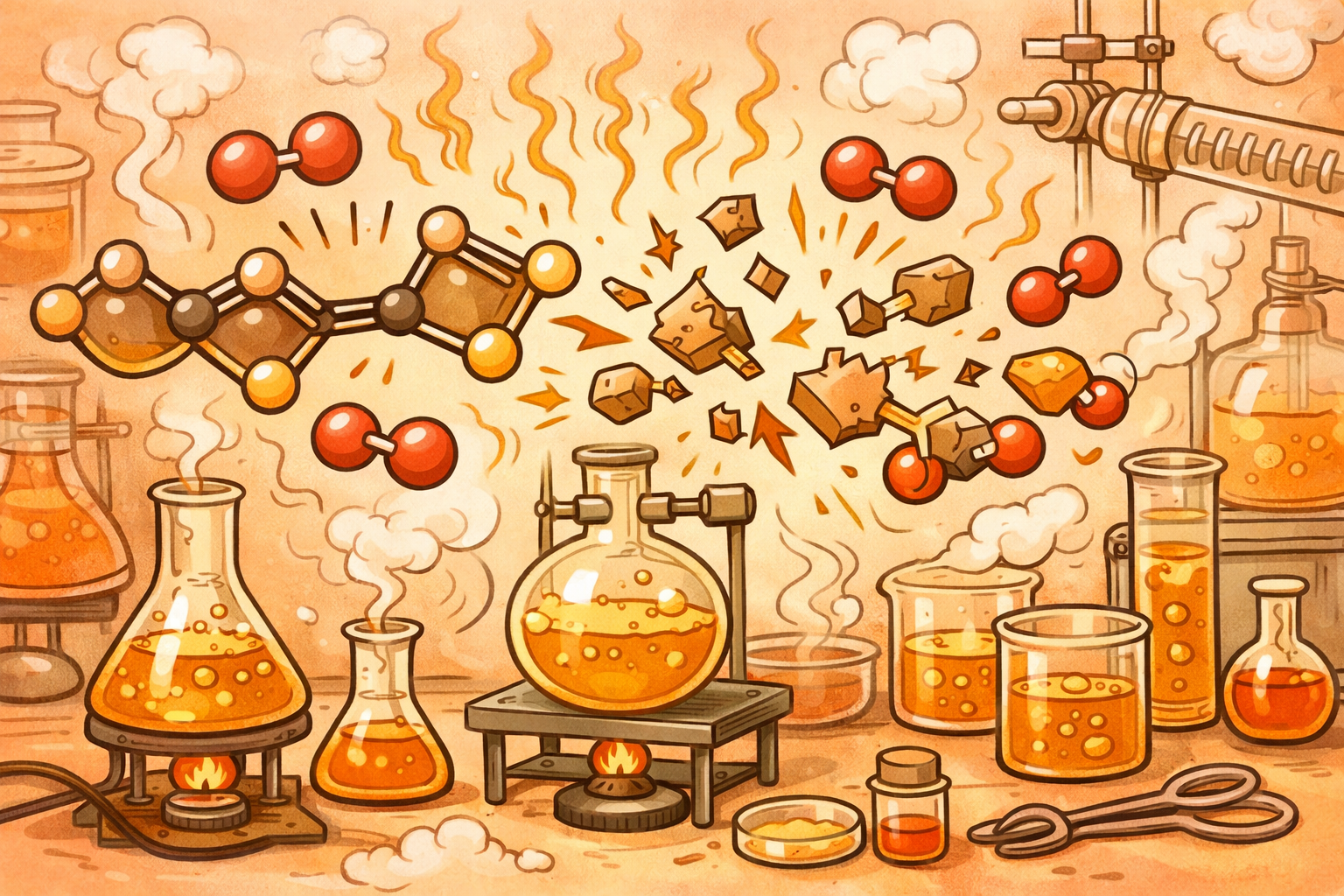
Why Polyunsaturated Fats Oxidize: The Chemistry Behind Rancid Oils
Every time you open a bottle of vegetable oil, you're starting a chemical clock. The moment polyunsaturated fatty acids (PUFAs) meet oxygen, they begin a cascade of reactions that transform these unstable molecules into compounds your body was never designed to handle. Understanding this process isn't just academic—it's essential for protecting your health from the oxidative damage caused by rancid oils.
The Molecular Structure That Makes PUFAs Vulnerable
Polyunsaturated fatty acids earned their name from their multiple double bonds—think of these as weak points in the molecular chain. While saturated fats like coconut oil have single bonds that create a stable, straight structure, PUFAs contain two or more double bonds that create kinks and instability.
🛡️ Trying to avoid seed oils? Seed Oil Scout has you covered.
2M+ downloads. 23K+ five-star reviews. Verified restaurant and grocery data so you always know what you're eating.
Common seed oils contain high levels of PUFAs:
- Soybean oil: 58% polyunsaturated
- Corn oil: 59% polyunsaturated
- Sunflower oil: 69% polyunsaturated
- Grapeseed oil: 71% polyunsaturated
These double bonds aren't just structural quirks—they're reactive sites where oxygen molecules love to attack. The more double bonds a fat contains, the more vulnerable it becomes to oxidation. This explains why fish oil (with 5-6 double bonds in DHA) goes rancid faster than olive oil (mostly monounsaturated with one double bond).
The Three Stages of Lipid Oxidation
Initiation: The process begins when a hydrogen atom gets stolen from a carbon atom next to a double bond. This theft can be triggered by heat, light, or metal ions—all common in cooking and food storage. Once that hydrogen is gone, you're left with a highly reactive free radical.
Propagation: This is where things spiral out of control. The newly formed free radical immediately reacts with oxygen to create a peroxyl radical. This peroxyl radical then steals hydrogen from another fatty acid, creating a new free radical and a lipid hydroperoxide. One radical creates another, which creates another—a chain reaction that can damage thousands of molecules from a single initiation event.
Termination: Eventually, two radicals collide and neutralize each other, or an antioxidant intervenes. But by this point, the damage is done. The oil now contains a cocktail of breakdown products including aldehydes, ketones, and other volatile compounds.
The Toxic Breakdown Products
When PUFAs oxidize, they don't just lose their nutritional value—they transform into compounds that actively harm your body. Research has identified over 100 different volatile compounds produced during oil oxidation.
The most concerning breakdown products include:
- 4-Hydroxynonenal (4-HNE): This aldehyde is so reactive it's used in laboratory studies as a marker of oxidative stress. It damages proteins, DNA, and cellular membranes.
- Malondialdehyde (MDA): Another aldehyde that forms cross-links between proteins and DNA, accelerating aging and contributing to chronic disease.
- Acrolein: An extremely toxic compound that irritates tissues and has been linked to cardiovascular disease.
These compounds don't just float harmlessly in your food—they integrate into your cell membranes, disrupt cellular signaling, and trigger inflammatory cascades throughout your body.
Why Restaurant Fryers Are Oxidation Factories
Commercial deep fryers create perfect conditions for catastrophic lipid oxidation. Temperatures routinely exceed 350°F (177°C), far above the smoke point of most seed oils. The oil sits in metal vats (metal ions catalyze oxidation), exposed to oxygen, for hours or even days.
Studies measuring oxidation in restaurant fryers found that oils can reach dangerous levels of oxidation products within just 7 hours of use. Many restaurants push their oil far beyond this point, filtering out food particles but ignoring the invisible chemical degradation.
The repeated heating and cooling cycles make things worse. Each time oil cools, it absorbs more oxygen. When reheated, oxidation accelerates. This is why that distinct "old fryer" smell is actually the scent of aldehydes and other toxic compounds volatilizing into the air.
Temperature, Time, and Light: The Oxidation Accelerators
Temperature: For every 10°C increase in temperature, the rate of oxidation doubles. This means oil heated to frying temperature (180°C) oxidizes 262,000 times faster than oil stored at room temperature (20°C).
Time: Oxidation is cumulative. Even at room temperature, PUFAs slowly degrade. Research shows that opened bottles of high-PUFA oils can develop significant levels of oxidation products within weeks, even when stored properly.
Light: UV and visible light provide energy that initiates free radical formation. This photo-oxidation is why quality olive oil comes in dark bottles—though most seed oils are sold in clear plastic, accelerating their degradation.
How Your Body Handles Oxidized Lipids
When you consume oxidized oils, your digestive system absorbs these damaged molecules just like normal fats. They incorporate into cell membranes, making cells more rigid and prone to dysfunction. Your liver works overtime trying to detoxify aldehydes, depleting glutathione and other antioxidants in the process.
The body recognizes oxidized lipids as damaged and mounts an inflammatory response. Immune cells engulf oxidized fats, forming foam cells—the same cells that create arterial plaques. This is why consuming oxidized oils is directly linked to cardiovascular disease, not through cholesterol, but through oxidative damage and inflammation.
The Antioxidant Depletion Problem
Seed oils are often marketed as containing vitamin E, a natural antioxidant. What they don't tell you is that this vitamin E is rapidly depleted trying to prevent oxidation. By the time you consume the oil, especially after cooking, the antioxidants are exhausted and oxidation products have accumulated.
Your body then has to use its own antioxidant reserves to neutralize these compounds. This creates a net negative—you're not just missing out on antioxidants, you're actively depleting your body's stores.
Protecting Yourself from Oxidized Oils
Understanding lipid oxidation chemistry empowers you to make better choices. Restaurants that deep fry, use high heat, or pre-cook foods in oil are serving you a concentrated dose of oxidation products. Even "fresh" seed oils from the grocery store have likely undergone significant oxidation during processing, storage, and transport.
The solution isn't just avoiding obvious fried foods—it's recognizing that any dish containing heated seed oils delivers oxidized lipids to your cells. From stir-fries to salad dressings that sat in warm kitchens, from baked goods to seemingly healthy vegetable dishes, seed oils and their oxidation products hide everywhere in restaurant food.
This is where technology becomes your ally. The Seed Oil Scout app helps you navigate restaurant menus by identifying which establishments use seed oils and suggesting safer alternatives. Instead of wondering whether that Thai restaurant's pad thai contains oxidized soybean oil or playing detective with your server, you can make informed decisions before you even walk through the door. Download Seed Oil Scout and start avoiding the hidden chemistry experiment in your food today.